Global Meteor Network, live
The Global Meteor Network is a worldwide network of low-cost video cameras, run by volunteers, that records meteors every clear night and computes their trajectories and orbits. I started it in 2018 (read its history); today it has more than 1,600 cameras in 45 countries. The plots below are loaded straight from the GMN servers, so they change from day to day. All GMN data are open under the CC BY 4.0 licence.
Where the cameras are
GMN cameras (locations rounded to half a degree; not every camera runs every night)
Last night's meteors

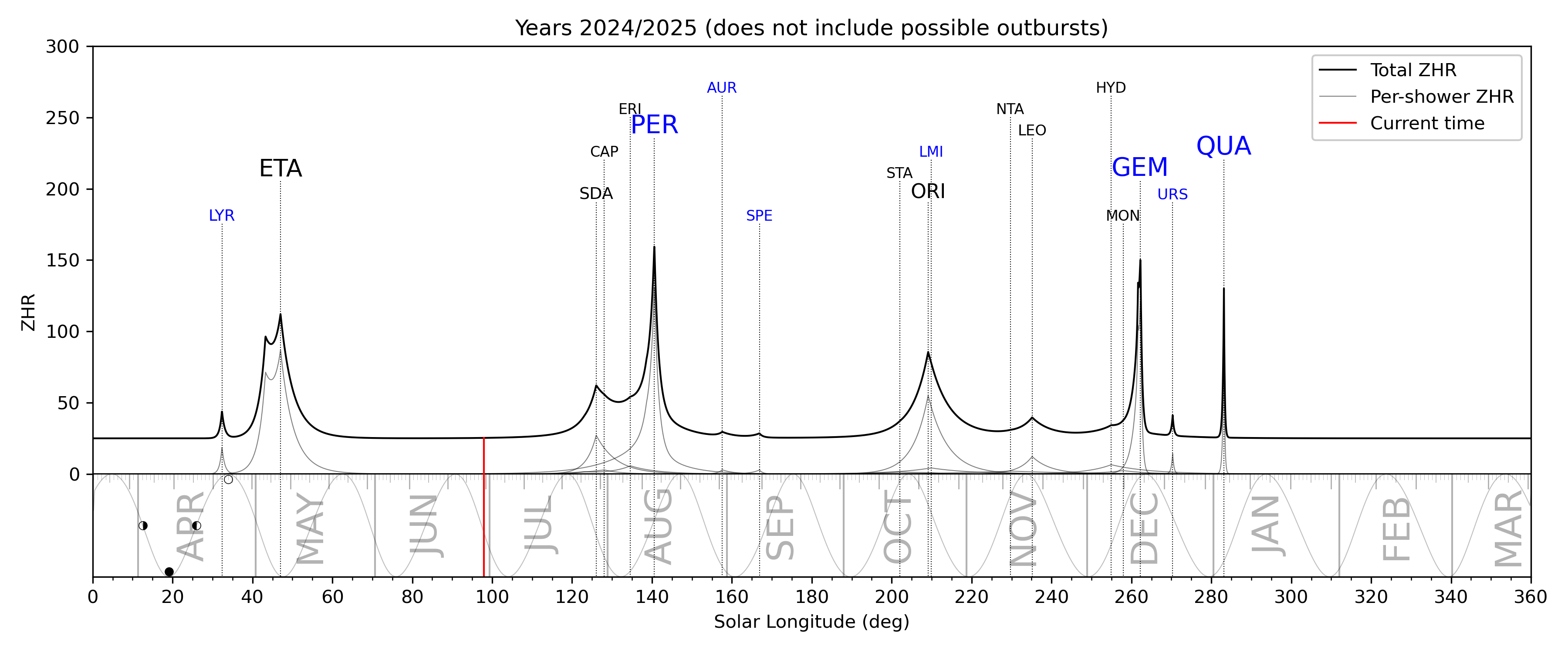
Meteor shower activity this year
Explore the GMN
- GMN website
- Live station status map
- Weblog: nightly images from every camera
- Open data: trajectories and orbits
- Daily and monthly radiant maps
- Meteor shower flux
- Camera fields of view in 3D
- Wiki: build a camera and join
- Community forum
- Outreach project for schools
- RMS camera software on GitHub
- How it works: the GMN methods paper (2021)
The people behind the network
The GMN exists because more than 900 volunteers, schools, clubs and observatories build and run cameras on their own time, many of them for years. They are partners in the science, and we thank them all.
Camera operators
Organizations
In memory of GMN members
If you are a GMN participant and would like your name changed or removed, please email dvida@uwo.ca.