History of the Global Meteor Network
Shortened and updated from “How the Global Meteor Network came to be”, which I wrote for the GMN blog in December 2018. The last section covers what has happened since.
The Croatian Meteor Network
The story starts in Croatia in 2006. Damir Šegon, then a technician at a CCTV company, pointed one of the most sensitive security cameras he had at the sky during the Geminids and recorded hundreds of meteors. That was the beginning of the Croatian Meteor Network (CMN).
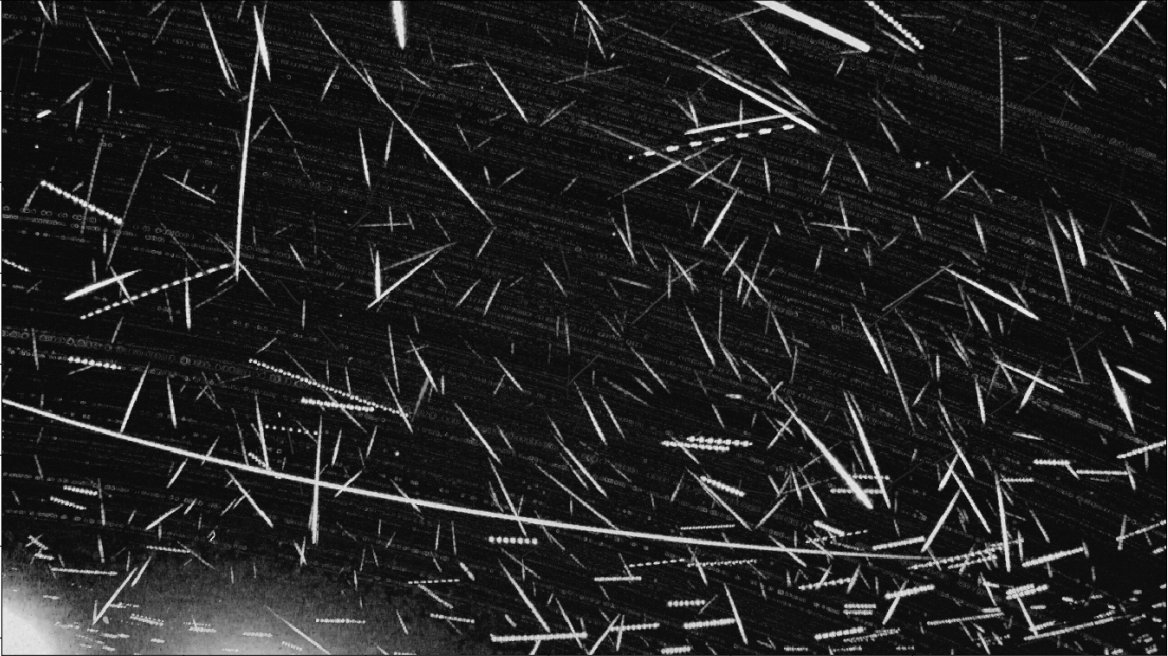
The hardware was good enough; the software was the problem. The CMN used SkyPatrol, free software by Mark Vornhusen that compressed each minute of low-resolution video into a single image holding the brightest value of every pixel and the frame in which it occurred. Meteors are brief and usually the brightest thing in view, so this worked remarkably well at a compression ratio of about 500 to 1. What was missing was a good detector and any way to calibrate the data. Damir brought in Pete Gural, a software developer and meteor enthusiast, who adapted his MeteorScan detector to these images, and Damir developed an astrometric calibration method that could handle the cheap wide-field lenses the network used.
I joined the CMN in 2009, while still in high school. Running the detector by hand was painfully clunky, so I wrote my first Python script for the network: raw images in, detections out. The CMN later switched to the CAMS recording software, which Pete Gural had developed for NASA-funded work on the same compression idea. I glued the recording, format conversion, archiving and uploading together in Python. It was my first big software project, mostly spaghetti code, and I learned a great deal from it.
A meteor station on a Raspberry Pi
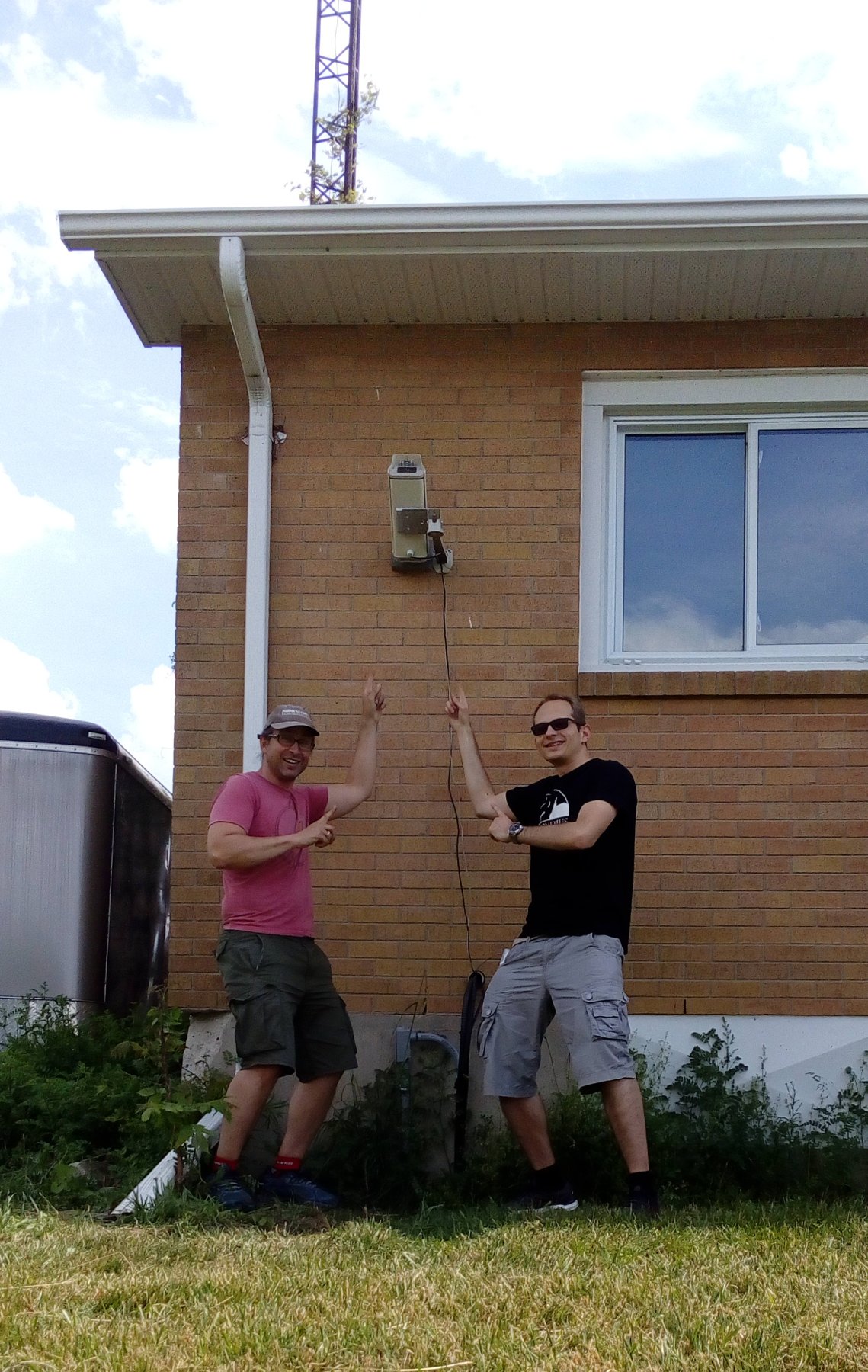
In 2014 I met Dario Zubović, a high school student keen on recording meteors with a Raspberry Pi. The first Pi was barely able to read video frames in real time, but the Raspberry Pi 2, released in 2015, had four cores and a gigabyte of memory. Within a few weeks that June, Dario and I had our own version of the compression running in real time on the Pi. Fireball detection followed in about a week, and star and meteor detection by the end of the summer. Dario did most of the heavy lifting in those early days.
Naming the project was harder. Dario, Damir and I spent days on it, gave up, and called the GitHub repository “Raspberry Pi Meteor Station” as a temporary name. RMS stuck. That summer we also reached the semifinals of the Hackaday Prize; I still have the T-shirt.
In 2016 I moved to Western University to start a PhD with Peter Brown. By then RMS could reliably record, compress and detect fireballs, stars and meteors from analog cameras, but development slowed and the project became an afterthought.
From analog to digital
By 2017 the future of amateur video meteor observing looked bleak. Analog cameras were disappearing, cheap capture devices were poor, good capture cards were expensive, and Sony had announced the end of its CCD sensors. What was the point of the software if there would be no cameras to run it on?
Two things changed that. In January 2017 I met Mike Mazur, who had come back to Canada for a PhD after more than ten years in Norway and had tried to start a similar network there. In June we installed the first permanent RMS station at Elginfield, Ontario. That summer, with a group of high school students at the Višnjan School of Astronomy in Croatia, we ran four cameras, each on its own Pi, and computed the first double-station orbits from RMS data. I wrote the first version of SkyFit, our calibration tool, in one afternoon there.
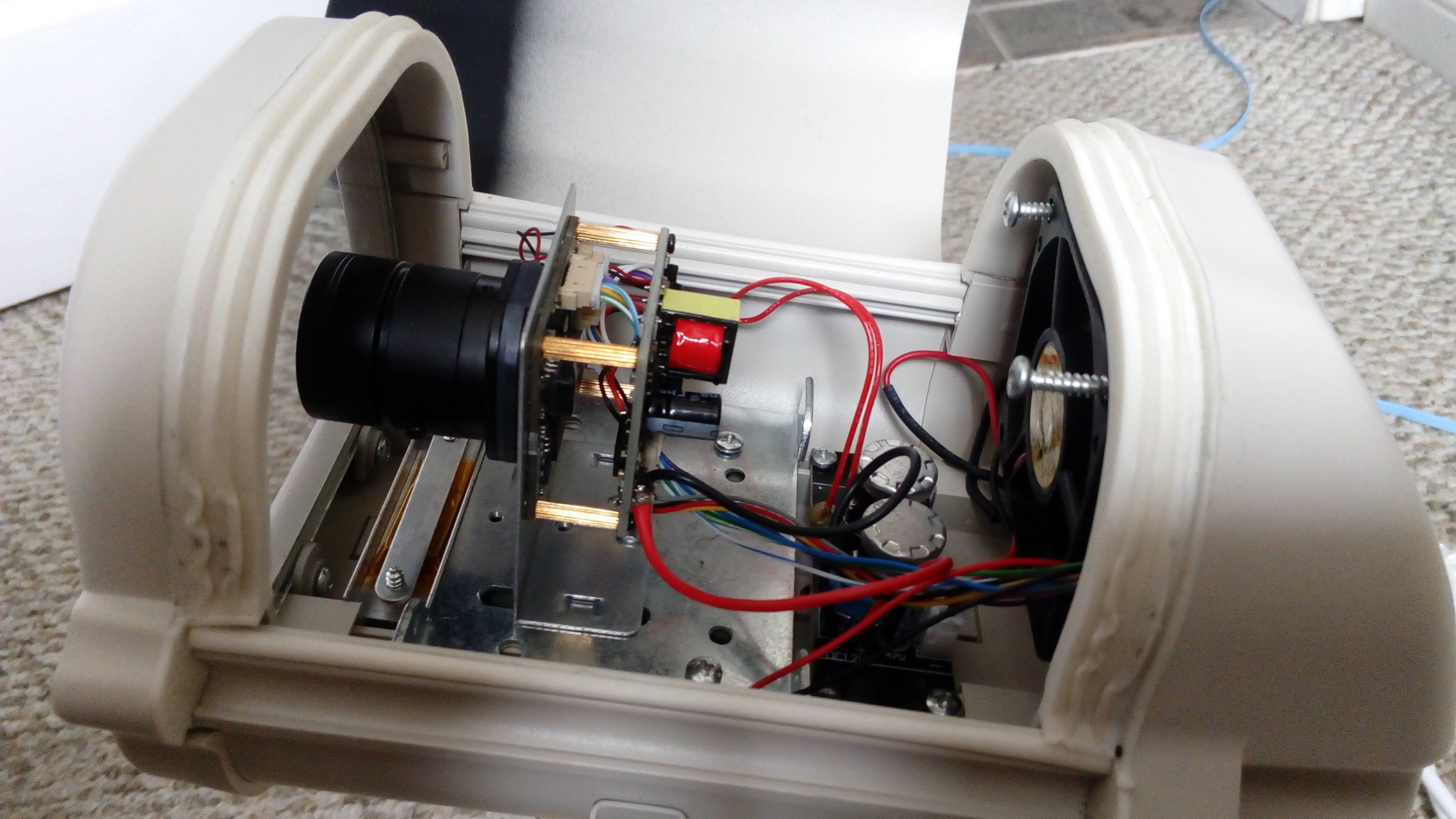
Then, at the International Meteor Conference in Serbia that September, Mike Hankey showed videos from inexpensive IP security cameras with Sony CMOS sensors. A few days later I ordered one. In mid-November, with an Ethernet cable running from my living room through the kitchen to the patio, Mike Mazur and I connected to it for the first time. Our first words are not printable, and a bright meteor crossed the field a few seconds later. The camera reached stars of about magnitude +5.5, and the Pi could decode its video on the graphics chip at no cost to the processor. We then showed that these CMOS sensors were fine for meteor photometry, and Patrik Kukić worked with Pete Gural and me on a correction for their rolling shutters.
The Global Meteor Network is born
At the end of 2017 Aleksandar Merlak set up several IP cameras at his house in Hum, Croatia, and started a small company to sell assembled cameras at a reasonable price. In January 2018 Mike and I put the first assembled system on eBay. Pete Eschman in Albuquerque bought it, and later that year he bought 14 more and set up the first large RMS network. In June 2018 the first pair of stations with overlapping views went up, at Tavistock and Elginfield in Ontario. The first station built entirely by a member of the community was in France; I mailed Jean Marie Jacquart a 64 GB SD card with the software on it, since easy-to-install images did not exist yet.
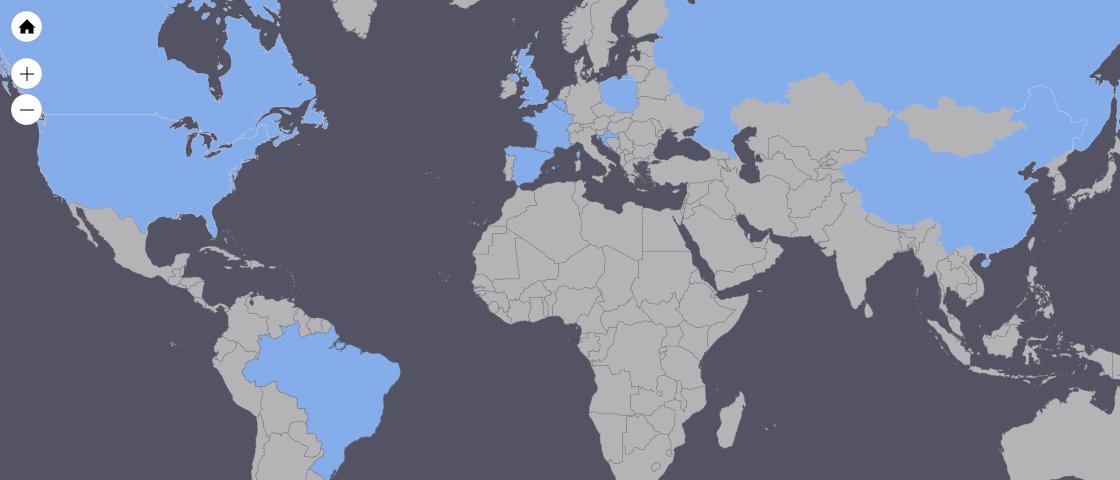
After I presented the system at the 2018 International Meteor Conference in Slovakia, I lost track of new stations; they just kept appearing. By the end of the year cameras were running in 11 countries. The first real test came with the 2018 Geminids: we computed orbits from the peak night, wrote a short article about them and released the observations and orbits publicly, all within about a day. As far as I know, it was the first immediate data release by the amateur meteor community.
Why it had to be global and open
Meteor science kept reinventing the wheel. Almost every network had its own calibration and trajectory code, closed and used by a handful of people, so nobody could easily check anyone else's results. Networks were national and fragmented, with incompatible formats. Systems were expensive and data reduction slow, so data were rarely shared until years later, if at all. And the cost kept out students and people in lower-income countries.
The GMN set out to fix all of that at once: one transparent, open-source code base anyone can inspect and improve; cheap, fully automated stations; and data cheap enough to produce that they can simply be made public. In 2018 I estimated that a $450 RMS station records meteors for about two cents per meteor per year, and that a database of 100,000 orbits could be built with about $8,000 of hardware, the price of a single pair of stations from the previous generation. The longer-term goal was to give cameras to schools and use meteor astronomy to bring students into science, carrying on the Croatian Meteor Network's tradition of working with young people.
Since then
- Real-time orbits. Trajectories and orbits are now computed automatically on the GMN server at Western and published every day under an open licence. The methods were described in a 2021 paper.
- Growth. The network has grown to more than 1,600 cameras in 45 countries, run by more than 900 volunteers, schools and clubs, and had computed more than 2.8 million orbits by the end of 2025.
- Science and operations. NASA's Meteoroid Environment Office uses GMN data to monitor meteor showers for spacecraft operators, and GMN cameras have helped recover meteorites, discover new meteor showers and record satellite re-entries.
- Schools. The GMN Outreach Project, funded by private donors, has given cameras and a curriculum to schools in 12 countries.
- New skies. Since 2023 the same cameras also watch aircraft contrails, day and night, in the Western Contrail Research Project.
See what the network recorded last night on the GMN live page.